
From Stockholm to Shanghai, Barcelona to Boston, the second half of this year’s Loc360° and UnLOCked events offered a clear view of how localization is evolving from an operational function to a strategic influence.
Across hundreds of conversations, executives, AI experts, and content leaders discussed not just where the industry is heading, but what it means to lead through change. The message was consistent: localization has moved beyond words. It’s now about trust, strategy, and measurable business impact.
If you missed the first half of the series, including key takeaways from Paris, Tokyo, Berlin, and Dallas, you can read our previous recap, “Global insights, local leaders: What we learned from Loc360° 2025 (Part I)”.
A series designed for strategy, not spectacle
As with every Loc360° event, the format stayed deliberately intimate. No booths or pitches, just time and space for peer-led conversation.
This year’s gatherings brought together more than 300 senior leaders from companies including AWS, Nintendo, Microsoft, Intuit, Salesforce, Stripe, Uber, Nike, Booking.com, Emerson, Kayak, Rakuten, and Miro, alongside a diverse mix of AI researchers, product managers, and localization heads.
Each stop on the tour explored a different side of transformation from operational discipline in Seattle to leadership and storytelling in Barcelona, but all returned to the same question:
How do we make localization matter at the highest levels of business strategy?
“Localization is no longer an afterthought, it’s a foundation for growth,”
– Georg Ell, CEO of Phrase
“The shift we’re seeing is from language as a service to language as strategy. And that’s a very different conversation.” said Georg Ell, CEO of Phrase, during his Tokyo keynote.
Shared themes across continents
1. AI maturity: from hype to governance

AI was the thread running through nearly every discussion, but it’s no longer just as hype. The tone across all events was practical, reflective, and grounded in accountability.
In Tokyo and Shanghai, leaders explored what it means to move from automation to orchestration: building systems that can scale intelligently, yet remain transparent, explainable, and aligned with human intent.
“Global teams must move faster than ever and AI must move with them, not ahead of them.”
– Semih Altinay, VP of AI Solutions, Phrase
Sessions on AI-driven workflows in China and Japan focused less on replacing human expertise and more on how to structure governance, data, and trust so that automation can truly scale.
“Companies aren’t just translating content, they’re transforming how they operate globally.”
–Katrina Jingyuan, AWS
2. Leadership and influence: claiming a seat at the table
In Amsterdam and Barcelona, the focus turned to leadership and the growing expectation that localization leads, not follows.
Chris Dell, former content leader at Booking.com, urged teams to define their purpose in business terms:
“Nothing will be given to you – you must take it.”
Localization, he argued, can no longer position itself as a service provider. To gain influence, it must speak the language of the business, connecting language work directly to growth, retention, and customer experience.
At UnLOCked Barcelona, Kevin O’Donnell expanded on that same theme:
“Shift left. Don’t wait to be invited. Bring localization upstream, closer to product, growth, and strategy.”
Through exercises like Mapping the International Customer Journey, leaders practiced identifying where localization removes friction, builds trust, and drives measurable outcomes.
The result was a shift from reactive translation delivery to strategic global enablement.
3. Measurement and maturity: proving impact
In Stockholm, leaders returned to the perennial question: how do you measure localization’s true impact?
Panelists from Vinted, GetYourGuide, and Puma argued for a complete reframing of metrics, from cost and word count to conversion, adoption, and customer satisfaction.
As one participant put it:
“We’ve been measuring words for decades. Success today looks like speed to market, global content availability, and conversion.”
The Stockholm event, themed The Global Content Trilemma, reframed traditional trade-offs like speed, cost, and quality as opportunities for creativity. Constraints, attendees agreed, are no longer limitations; they’re design principles.
“Constraints aren’t barriers,” one speaker noted. “They’re what make innovation necessary.”
4. The rise of the data-literate localization leader
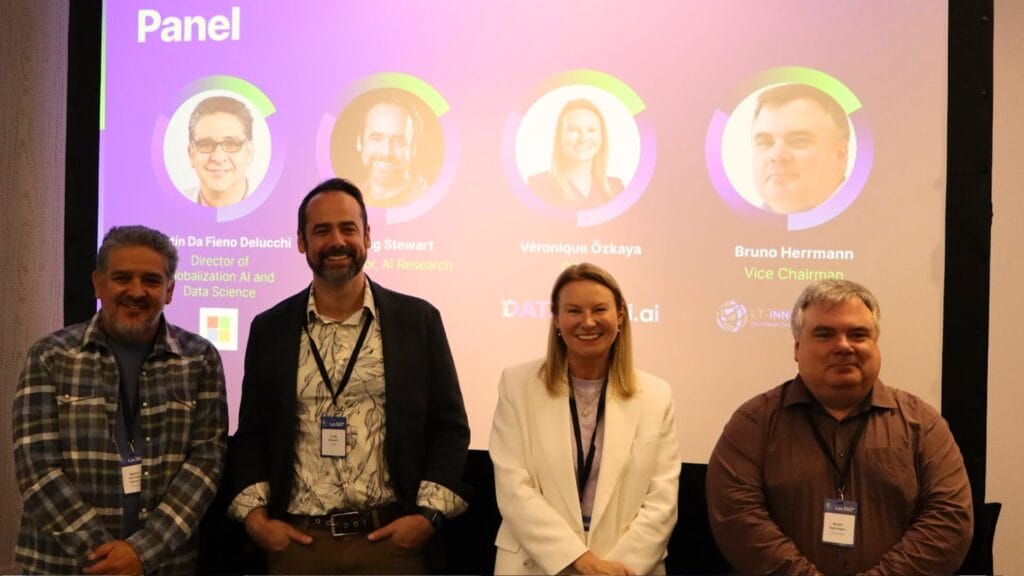
In Seattle, Bruno Herrmann’s keynote AI in Action provided a pragmatic roadmap for operational readiness. His central idea: localization is now a language intelligence discipline, not just a delivery function.
“Start with data, and never stop using data,” he said.
“AI won’t take you to the moon, but it can generate a picture of it.”
Herrmann described how the next generation of localization professionals will blend linguistic, technical, and analytical expertise, becoming stewards of data and governance.
The emphasis wasn’t on doing more with AI, but on doing better with it: measuring performance, creating feedback loops, and managing risk with the same rigor applied to finance or product.
5. Trust: the new measure of quality
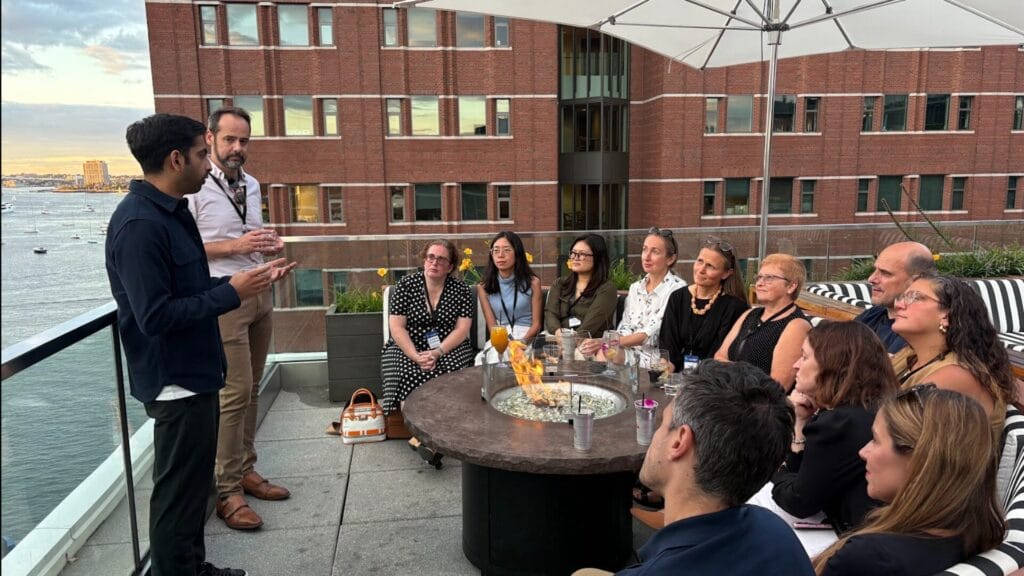
The Boston fireside chat between Craig Stewart (Phrase) and Abhinav Lanka (DeepL) was one of the series’ most candid moments. Both leaders discussed how failure in areas like bias, latency, or transparency can be the best teacher.
“Progress in AI isn’t linear,” said Craig. “It’s messy, subjective, and full of lessons, and that’s exactly where innovation happens.”
“Raw quality is no longer the differentiator,” added Abhinav. “Trust is.”
Their conversation underscored a broader realization across all events: perfection is no longer the goal. Reliability, explainability, and transparency are the new benchmarks of excellence.
From Europe to Asia to North America, the consensus was clear that the future of localization depends on earning trust through visibility and accountability, not just output.
City snapshots
Stockholm: Redefining value in global content
Leaders explored how to measure impact beyond speed and cost, highlighting content as a growth engine and collaboration as the key to scale.
Amsterdam: Identity, metrics, and mindset
Chris Dell’s keynote urged localization leaders to align with commercial goals and communicate value with confidence: “Value creation outweighs cost saving.”
Seattle: Operational AI and governance
A deep dive into readiness, governance, and the data foundations needed to make AI meaningful in day-to-day workflows.
Tokyo: Intelligent automation and adaptive content
Discussions centered on how teams can balance automation with tone, nuance, and brand alignment across languages and media.
Shanghai: Localization meets cloud-scale growth
AWS, Phrase, and Clearly Local explored how China’s tech ecosystem is driving rapid global expansion through data-driven, AI-assisted workflows.
Barcelona: Influence through empathy
Kevin O’Donnell’s session on shifting left reframed localization as a growth discipline rooted in empathy, storytelling, and measurable business value.
Boston: Learning through failure
A candid conversation between Phrase and DeepL leaders on bias, accountability, and the role of transparency in AI evolution.
Takeaways for the year ahead
- Localization is strategic by design.
Its influence now stretches across marketing, product, and customer success. - AI needs governance, not glamour.
The winners will be those who build explainable, data-driven systems that earn trust. - Metrics must evolve.
Words and workflows are out; business outcomes and customer impact are in. - Leadership requires empathy.
Data persuades, but stories inspire. The strongest localization leaders do both. - Human creativity still defines the edge.
AI scales language; people shape meaning.
From localization to global intelligence
After seven cities, countless debates, and one recurring theme, the conclusion is clear: localization is becoming the central nervous system of global business.
It connects ideas, data, and experiences, turning content into strategy and AI into action.
Or as one Boston speaker put it:
“Building language AI isn’t about getting everything right, it’s about learning, improving, and moving forward step by step.”
Because while speed and scale still matter, the future of localization must focus on global, human, shared intelligence.
Discover Phrase events
Join us at one of our in person events to see first-hand how we’re transforming customer experiences and driving international growth with our latest technologies, innovations and industry insights.


