Content production has never been faster. According to Canto’s 2026 State of Digital Content report, 82% of teams increased their output last year, and the acceleration is continuing. Enterprises are publishing more content across more languages and markets than at any previous point.
Yet greater output is not necessarily making brands more distinctive.
As more companies gain access to the same general-purpose AI models, production capability becomes a weaker source of competitive advantage. The risk is not that AI inevitably makes every brand sound identical. It is that companies using the same models without their own brand knowledge, market context, and audience understanding will default to broadly similar output.
The customer experience begins to feel interchangeable, whether it appears in New York, Milan, or Delhi. The company may be operating globally, but its content has lost the characteristics that make the brand recognizable.
The global content disconnect report, an independent study of 550 senior leaders across nine countries, commissioned by Phrase, shows the scale of the challenge. Ninety-five percent of enterprises say personalized customer experiences are critical to growth, yet only 28% can deliver them consistently across markets.

The audience that already knows the difference
Gaming is where this tension is most acute, and where the consequences are most visible.
There are more than 130,000 titles available on the Steam Store. When a player buys a game and finds the experience frustrating, unengaging, or culturally tone-deaf, they can request a refund within 14 days as long as they have played for less than two hours. They can then move straight to another title from an ever-expanding wishlist.
The mobile market can be even less forgiving. Free-to-play models allow players to abandon one game for a competitor without having invested anything beyond their time.
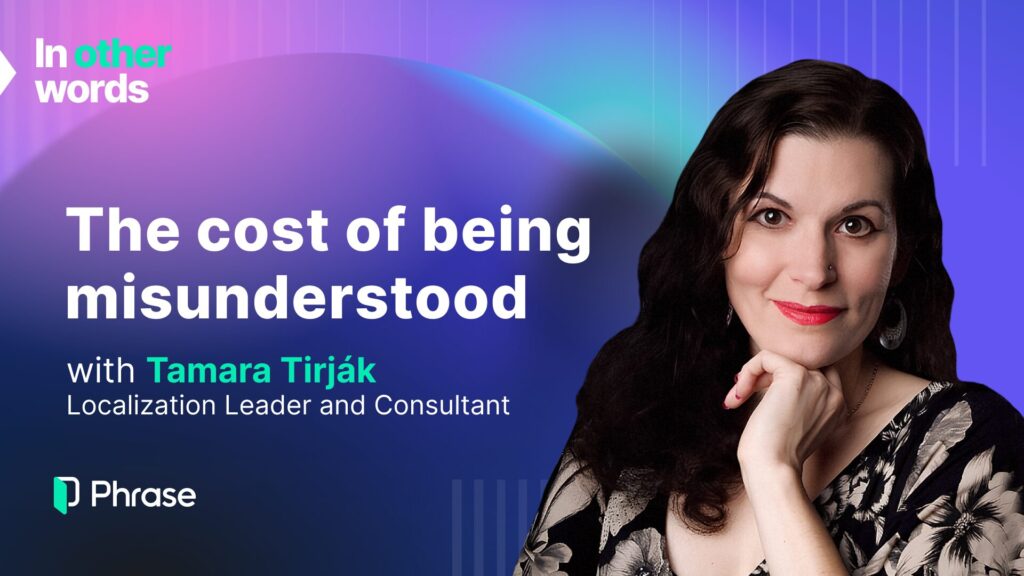
Tamara Tirják spent a decade building and leading localization at Frontier Developments and now advises companies on language strategy. On a recent episode of the In Other Words podcast, she described how little tolerance players have for an experience that fails to meet their expectations.
“If the game that I bought is unplayable or even just unenjoyable and it’s frustrating me because of the language, I can get a full refund within two hours of playtime with just a click of a button and then go to the next game from my ever-expanding wishlist.”
Players are also paying closer attention to how games are made. Steam requires developers to disclose generative AI content that appears in a game or is produced during gameplay. For a skeptical audience, that disclosure can influence reviews and purchasing decisions.
The reaction to Clair Obscur: Expedition 33 shows how sensitive the issue has become. The debut title from Sandfall Interactive won Game of the Year and Debut Game at the Indie Game Awards before both awards were revoked after the use of generative AI placeholder assets during development came to light, even though those assets had subsequently been removed.
Gaming will not determine how every industry responds to AI. It does, however, demonstrate what happens when customers can move easily between competitors and quickly recognize when content lacks the care they expect.
What inventing a language reveals
At Frontier Developments, a team led by dialogue manager James Stant made a creative decision that began with the player experience rather than production efficiency.
They invented a fictional language called Planco for Planet Coaster and Planet Zoo.
One of the principles behind the language was that positive emotions should be expressed through happy-sounding words. The Planco word for happy is “wippi,” which Tamara describes as “a really happy word to say.” Frustration was expressed using words designed to sound grumpier.
These choices were intentional. They reflected an understanding of how players would hear the language and how it should make them feel long before individual lines of dialogue were written.
“Of course, I know that it’s not impossible to prompt an LLM to create a language but it would completely shift the focus to the outcome and ignore the process.”
She described how the creators of constructed languages consider sociolinguistic questions, including how a fictional society would use grammar and how its vocabulary would reflect the ideas that matter within that world.
“They create the language because they enjoy the journey, not because at the end of the process, there is an outcome, which is what happens when the thinking process gets outsourced to the AI.”
That distinction between process and outcome reaches far beyond gaming.
Enterprises are using AI to produce content faster and at lower cost. What the model does not automatically inherit is the understanding that made the best content valuable in the first place. That understanding comes from the choices made during creation, the knowledge of the audience, and the context accumulated by the organization over time.
Stanford’s Meta-Harness research supports the broader principle that the same underlying model can perform very differently depending on the system surrounding it. The model matters, but so do the instructions, tools, context, and evaluation methods within which it operates.
As Phrase CEO Georg Ell wrote recently in an article examining what happens when translation costs approach zero, “If Nike, Adidas, Puma, and Reebok all use the same model with no differentiation layer, they all sound the same. That’s a disaster.”

Access to the model is becoming less differentiating. The advantage increasingly sits in what each company brings to it.
Proving the principle at scale
37Games, the publishing arm of Shenzhen-listed 37 Interactive Entertainment, operates titles including Puzzles & Survival across more than 200 countries and regions.
The company expanded from 10 to 18 languages and now produces nearly 40 million words annually, while continuing to deliver the frequent updates expected of live-service games.
The volume is significant, but the operating principle behind it matters more.
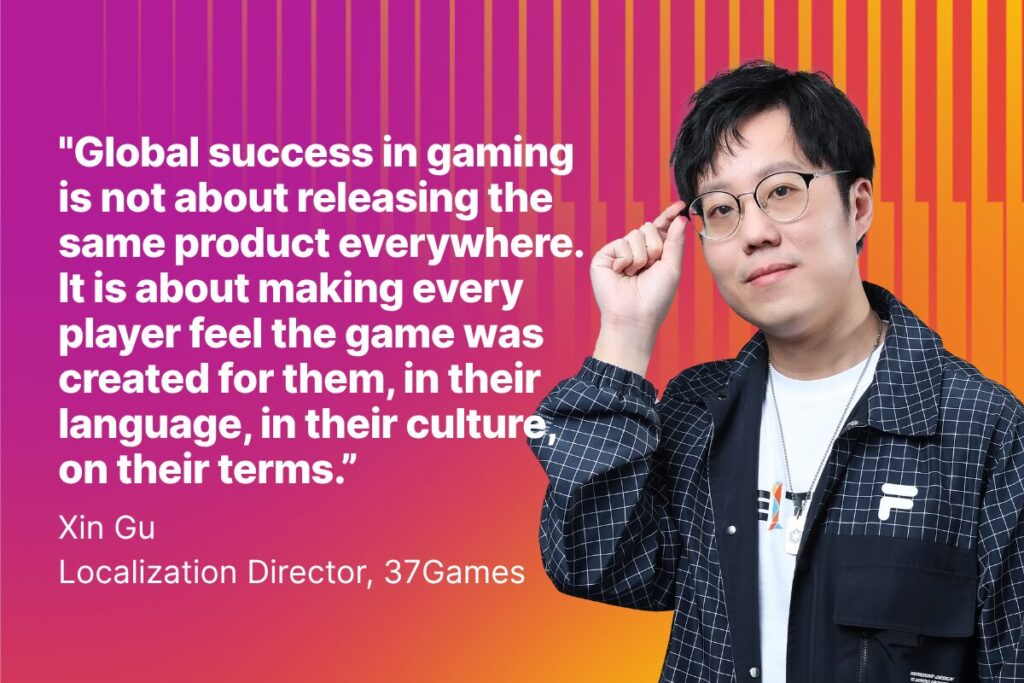
37Games combines automation with centralized language assets, quality processes, and market knowledge. This enables the company to increase output without treating every market as an identical destination for the same content.
That is the difference between expanding production and building an experience that carries meaning across markets.
The global content disconnect report shows that the same challenge extends well beyond gaming. Eighty-nine percent of enterprises plan to enter new markets within five years, yet half say they have already lost revenue because of disconnected customer experiences.

The gap between growth ambition and content capability is where differentiation is being lost.
What still makes a brand distinctive
Companies need to treat audience knowledge as part of their content infrastructure.
Brand standards, terminology, approved market language, cultural guidance, and evidence of how audiences respond should be available to every model and workflow involved in content creation. That knowledge also needs governance so it remains accurate as the business, brand, and markets evolve.
Without this context, AI can accelerate inconsistency. With it, the same underlying model can produce a very different customer experience because it is operating within the company’s own knowledge system.
This is where language intelligence becomes critical. It connects content generation with brand rules, market context, language assets, quality standards, and customer signals. It allows companies to scale communication without stripping away the qualities that make the brand recognizable.
The model may be widely available. The intelligence surrounding it should belong to the company.
The question leaders cannot ignore
Near the end of her conversation on In Other Words, Tamara poses a question that should concern any executive responsible for content at scale.
“If ultimately everything uses the same tools, what will make them distinctive?”
It is a business question with measurable consequences.
The organizations that can answer it are using their audience knowledge in the systems producing their global content. They are making context and judgment available at the same scale as the models themselves.
The organizations that cannot answer it are increasing volume and relying on speed to compensate for sameness.
Understanding the audience has always mattered. In a market where competitors can access the same models, knowing how customers interpret and respond to a brand becomes an advantage they cannot simply subscribe to.
Watch the full conversation
Tamara Tirjak spent a decade building and leading localization at Frontier Developments, where her team invented a fictional language and managed 48-hour content pipelines for live-service games.
Now an independent consultant and researcher, she joins Jason Hemingway on In Other Words to discuss why audience understanding will become more valuable as AI makes content production faster and more widely available.