Mastercard’s former CMCO on dropping the brand name
How confident would you be removing your company’s name from its logo? Raja Rajamannar tested recognition across 26 countries before making that call at Mastercard. The Mastercard Senior Fellow and Former CMCO explains why he also cut ad spend by 70%, and who brands really need to convince when AI is making the recommendation.


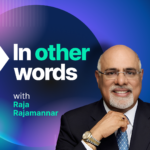
with Jason Hemingway and Raja Rajamannar

Now Streaming on


About our guest
Raja Rajamannar is a Senior Fellow at Mastercard and a pioneering marketing leader whose twelve-year tenure as Chief Marketing and Communications Officer transformed Mastercard into one of the world’s most valuable brands, rising from rank 87 to number 12.
With a background in chemical engineering and a deep expertise in quantum marketing, behavioral psychology, and AI-driven brand strategy, Raja has authored the Wall Street Journal bestseller Quantum Marketing and hosts Bloomberg’s Quantum Marketing series.
Join the conversation
In Other Words features senior business leaders with experience and ideas across marketing, AI, customer experience, international growth and the wider forces shaping global business.
Interested on appearing on the show or would like to suggest a future guest? Get in touch with Pamela Ghosal, Director of Global Communications on podcast@phrase.com
All guest suggestions are considered based on editorial fit.

Episode transcript
[00:00:00] Raja Rajamannar: It’s a total transformation, right? It’s a total disruption to how we are doing things today. So for example, a consumer is delegating their decisions for search or even for purchase. Agentic is obviously the purchase. Search is also completely changed from SEO to AEO to GEO. All that good stuff is happening, right? Now, my entire discovery process is actually being changed, and it’s actually being narrowed, right? In the past, I would say, “I want to see where should I travel to, which airline?” I go to Google or something like that, and then I’ll get all these answers, and then I’ll figure out, I’ll navigate. But now it tells me, AI, that this is the right one. This is what you should go with kind of a thing. And most of the times the first answer is satisfying because it’s positioned to be in a compelling fashion, and I go with it. So what happens is, how does an airline or a travel agent who is not in that stream of consciousness even get exposure to me? And I don’t get to discover that. There might be actually a better offer or a better airline, but I don’t get to discover because I have delegated my discovery process to my AI engine. Number two, this is even more dangerous, is when I delegate my purchase decision to the agent, that’s the Agentic AI, then it is my mission which is making all the purchases. So I don’t even get involved in that part of the process. This is on the consumer side. Now put it on the marketing side. Marketers have actually delegated already, even at the search engine level. They delegated the discoverability to machines. And so that is not entirely new to them that they now delegate the discoverability as well to machines. So if you were to see from the point of today’s situation compared to what it was before, in the past it was individuals talking to companies and vice versa. Now it is individuals’ machines talking to marketers’ machines, and the two machines are figuring out, and then the deal is
[00:01:47] Jason Hemingway: struck or not.
[00:01:48] Jason Hemingway: Welcome to In Other Words, the podcast from Phrase, where we speak with leaders shaping how global businesses grow, scale and operate. Today’s guest is Raja Rajamannar, Senior Fellow at Mastercard and one of the most influential marketing leaders of his generation. Over 12 years as Mastercard’s Chief Marketing and Communications Officer, he transformed the brand into one of the world’s most valuable brands. He’s the author of the Wall Street Journal’s bestseller, Quantum Marketing, and host of Bloomberg’s Quantum Marketing series. We’ll explore how AI agents are changing the way brands are discovered and selected, and examine why personalization, trust and brand consistently break down at the global level, far more than most leadership teams realize. Raja, welcome to In Other Words.
[00:02:32] Raja Rajamannar : Thank you very much, Jason. Delighted to be here.
[00:02:35] Jason Hemingway: And it’s fabulous to have you here. I mean, I’ve spent years following you in the marketing press, Marketing Week and all of those kinds of publications from a marketing point of view. So, it’s really great to have you.
[00:02:45] Jason Hemingway: So, let’s get started. I always like to ask about people’s career. And you started as a marketing trainee in India and then ended up running, you know, the global brand for Mastercard. Is there anything that would surprise people about how you got there? Or just tell us a little bit about that story.
[00:03:03] Raja Rajamannar: I think the story before the story is more interesting, which is, I never planned to be a marketing person. As an undergrad, I did my Chemical Engineering, my Bachelor’s in Chemical Engineering, and I was first in my university. I was a valedictorian, got two gold medals, and I wanted to pursue Environmental Management as my career. Because within Chemical Engineering, I was actually specializing in Environmental Engineering. So, I joined Indian Institute of Management in Bangalore, where I took the Environmental Management and Human Settlements as my specialization field. And between the first and the second years, we had to do an industrial training program, as they would call it, like a summer internship. And I did it with a color cosmetics company in India called Lakmé, which was a part of the Tata group. I was given a logistics project because I was an engineer, and it was quantitative. And they gave me a small desk, and I was sitting outside my supervisor’s cubicle. And my supervisor was having a conversation with the agency people on trying to figure out how women from the tier two cities in India, in South India, their perceptions have to change, where they don’t feel that using color cosmetics is something which is a slur on your character or on your morals. Because the social norms in the country at the time were, and I’m talking about 40 years back, that if you are putting color cosmetics on you, you are trying to attract attention towards yourself, and no ‘good woman’ would do that. So, you’re supposed to be very modest, and you’re supposed to not show off, and all this stuff. And they were debating and discussing how they can actually change those perceptions. And they were coming up with a very weird and a complex concept in my mind, which said that if music be to mood what color is to beauty, play on. I sat down there thinking, scratching my head. I was overhearing all this conversation between my boss and my agency people. So I said, what the hell does it even mean? And why are they complicating it? So, I just took a piece of paper, and I wrote on top of it,
[00:05:20] Raja Rajamannar: “Is it bad to look good?” Then I just sort of stood because I gave literally the story of my own sister, who is also from the same conservative family background, but she used to love using color cosmetics. And what’s wrong with that? And why is it even an issue? And I just went to him, and I said, “Hey, what do you think about it?” To cut the story short, it got released as a campaign, and it won the Best Campaign of the Year award. And suddenly I started feeling, maybe actually, you know, I’ve got some innate talent for this area. It seems to be so fun and so cool because that which I actually conceptualized right there in a few seconds ended up being an award-winning campaign. So, the tangible manifestation of what I was thinking was so powerful, I started taking subjects in marketing, and before I knew it, I was already headlong in marketing, and 41 years down, I’m still in marketing.
[00:06:13] Jason Hemingway: I mean, that’s a fantastic story and almost by accident, isn’t it? But actually, a very good line, “Is it bad to look good?” That’s great. And also that idea of simplifying is quite interesting, isn’t it? You don’t have to overcomplicate messages for them to be kind of understood. Lots of times, people want to cram stuff in, don’t they? And it’s like, no,
[00:06:32] Raja Rajamannar : just
[00:06:32] Jason Hemingway: try and keep it simple. Well, let’s get on to sort of a bit more recent times than your start. And you’ve now got a book, Quantum Marketing, that’s obviously been translated into, you know, something like 14 different languages. And I’ve read that it was taught at over 300 universities, which is amazing. And for those people that are listening in that haven’t read it, you know, your central argument is very around this idea that marketing is entering what you’re calling a fifth paradigm. Can you just walk us through what that means from your point of view and whether, you know, the last few years are confirming or the couple of last years are confirming your thesis, or is it moving even quicker, you know? What’s your thinking today?
[00:07:13] Raja Rajamannar: Yeah. So, firstly, the premise of Quantum Marketing is that classical marketing is no longer working. The theories and the frameworks of classical marketing were formulated more than 60 or 70 years back. At the time, there was no internet, there was no mobile, there was no social media, of course, there was no AI. And I started asking myself this question several years back, saying that, “Are marketing theories so timeless?” Like the theory of gravity or the theory of electricity. They are all physics. They don’t change with time. Is marketing like that? And I came quickly to the conclusion that no, marketing is dynamic. As people change and as the circumstances around people change, you have to factor in those changes into your new theories, into new formulations, into new formats and frameworks. And what’s interesting is many of the old frameworks were actually not working, and you had to reinvent those frameworks. It’s not just modification or adaptation. And I did a lot of empirical studies. And I looked at quantitative data, and I said, “Look, advertising is not working. Why are we advertising more? Loyalty programs are just a myth. Why are we spending zillions of dollars on loyalty programs?” Then you have got things like purchase funnel. Purchase funnel doesn’t exist anymore; it has collapsed. Market research, the way it is being done, it’s completely crazy. Because, you know, for example, if you just focus on market research, when you look at many of the surveys that are done in market research, they are very laborious. And they are stupid. The way the questionnaires are done, if it is a survey, they’re stupid. And people just give up midway, and they just start casually checking to get over with the survey as opposed to really being in it and thinking, pondering, and then answering it the right way. That’s one part of it, the methodology. But more importantly, fundamentally, a lot of, in fact, most of our decisions are driven by our feelings and emotions, and they are subconscious. So, when you ask somebody consciously, tell me why did you do it or tell me why do you like it, they are going to give a post-rationalized explanation of what it is as opposed to what is actually going on in the mind. Asking those kinds of questions doesn’t make sense. It’s garbage in, garbage out, garbage question in, and then you get a garbage answer out. So, that is something which I said is not the right way that things are to be happening, and you need to reinvent. And I gave a new framework called Quantum Marketing, capturing every one of these new ways of doing things. And I experimented them at Mastercard extensively and found the validation of those. So, this is not just a hypothesis that I came up with, but these are theories that have been validated. And that’s the reason why now they are being taught in more than 300 universities around the world. And I’ll just give one simple example. Like at Mastercard, I cut down the advertising by more than 70%. Nothing happened in terms of it didn’t collapse. People were very nervous. They said, “Look, is this guy going to throw the entire marketing machinery of Mastercard under the bus?” Quite to the contrary, we started going faster because we are reinvesting that amount very sensibly in other areas. And we started moving from advertising into experiential marketing. And we got into a whole bunch of things like multi-sensory marketing. We have our sonic brand. We have our symbol brand and so on and so forth. With the result of which the brand started accelerating very, very rapidly. And it has become now the 12th most valuable brand, and it used to be number 87 at one point in time. And the marketing budget that we had utilized has actually been so well utilized, so effectively deployed, that the results were pretty stunning. And in fact, for the last several years, we have been rated consistently as one of the fastest rising brands in the world.
[00:11:17] Jason Hemingway: Yeah, I mean, the rise of Mastercard is very well documented, and some of your things you’re talking about are very well showcased in lots of different publications on marketing. And let’s just delve into sort of Mastercard a little bit, and we’ll come back to things like loyalty and personalization, which are some of the themes that come through in your ideology. When you dropped, one of the things you did at Mastercard, you drop the name from its own logo after testing that kind of idea. And that was a really, really brave decision as well as the sort of stopping advertising, which I think would make anyone nervous, but it seems to pay off. And not many CMOs would take the risk of advertising or even that logo, the name dropping in the logo from all those different countries. What did you learn from that process, and where did that kind of confidence come from that you could accept that level of risk or personal risk, I guess, and brand risk, I suppose.
[00:12:13] Raja Rajamannar: First and foremost, for me, that was a very risky move. It could have gone wrong. And that would have been the end of my career at Mastercard for sure, if it didn’t go right. But that’s a risk. And unless you take a reasonable risk, you’re not going to really move the needle in a step jump. Linearly growing, incrementally growing is one thing. But I was after the big hits. And for the big hits, you have to take big risks. But the risks were very thoughtful. So, when I started looking at why I do want to drop, why do I want to drop the name from our logo, the logic was very cold. On the one hand, it increases, you know, if you look at any of the checkout, for example, on a small mobile device like a telephone. You’ve got four brands appearing there, Mastercard and three of its competitors, all tiny, tiny, tiny, tiny. And my logo had my name in the middle of it. Mastercard was in the middle of it. Nobody could read it unless you amplify it some 10 times. So, why is it there? And if I take out that name and I repurpose the space, my logo would actually look, it would actually be bigger by 20% than with the name in, as an example. Or the second thing is, you know this much more probably than anybody else. Different countries have different languages. And when you look at something like, in some countries like China, the name Mastercard is not even Mastercard. Okay. And it is like, you know, and there is an identity issue. And in some places, you write in the reverse order, you know, like an Arabic script. Okay. And then you have got, and locally, how many languages you translate your brand name to. And that’s a very significant expense. And so long as you have got a good recognition for your logo, even without the brand, by taking away that name, you are simplifying life quite a lot. So, that was the second big thing. The third thing, what we have also done was a brand logo without the brand name is always perceived to be much, it’s, you know, let me put it this way. I’ll take a step back. So, the brain has got the prefrontal cortex, and then you’ve got the back. The prefrontal cortex is the rational brain. All the words and thinking and analysis, everything goes to the front of the brain, the prefrontal cortex. Images, visuals, feelings, emotions, they all happen somewhere else. When you have a logo with your name, and with your name, which is written verbally, as well as your picture or visual, the brain is a little confused. Is it going to the back or to the front? It typically ignores the front part of it, which is the name. But if you have only the name, it’ll go through the front, which is the most ineffective way to generate the right emotion in consumers’ minds and hearts. And therefore, what we did was when we dropped it, you kill that confusion. And people look at it, immediately they know that there is Mastercard. It evokes feelings and emotions. Very subtle, very, very subtle, but they are there. And I did a lot of research. Is this all my hypothesis? Yes, I had to start with the hypothesis, and I had to think through it. And once I have a hypothesis, I have to validate it. I validated it in multiple countries around the world. And we found that the recognition, even without the name Mastercard written on it, is huge. So, I said, let’s take a risk and then jump in. And of course, the first day I went to my CEO, and I presented this to him. And I told him, “Hey, I think we should drop our name from our logo.” He looked like I had two heads, or three heads. So, he said, “What’s wrong with you?” I said, “No, this is the reason why.” He got convinced that we went to the board. The board looked at us both that we are having a very weird proposition because the board has got their responsibility to be making sure that they are steering the management in the right direction. And it took them a lot of courage, too, to support and eventually they did. And then we went, and it’s one of the best brand relaunches, I would dare to say, over the last couple of decades.
[00:16:16] Jason Hemingway: No, exactly. I think the proof is actually out there to sort of substantiate that. And I wonder if there’s any aspects of that old Chemical Engineer coming through who was trying to get all that evidence and working that through. But that’s a different conversation. Was there, just out of interest, was there any markets where it didn’t work or it wasn’t as effective, and the name maybe needed to be used, or was it completely, no, it’s quite worked everywhere?
[00:16:40] Raja Rajamannar: This is a blessing, right? It worked every single place. Now, what we did was we adjusted the shades of the two colors, the red and yellow. We adjusted the shades because in some places, the old yellow was seen to be cheap, faded, outdated, and downmarket. So, we had to make it a reddish yellow, almost tending towards orange, which has got very positive connotations. It is associated with sunrise, and there are flowers blooming, spring season, and so on. And it talked about a lot of optimism in general. Then, on the other hand, the red was again seen to be dull, and it was like blood, and it had various kinds of connotations. We adjusted it. And then they said, “Now this looks like the color of passion.” It evoked a lot of positive feelings. And what is beautiful is human beings are human beings everywhere in the world. So, when they see certain primordial mechanisms start operating in their mind, and they are very uniform across the entire world, whether you are in the Middle East, you are in India, you are in the USA, or South America, it doesn’t matter. It’s exactly the same kind of what you call perceptions that people have when they are very elemental, when they are very fundamental. The fundamentals are not yet, sort of, they are not tinkered by culture. Now, then the second part of it comes is, the Romans have actually done something amazing. They came up with geometry in architecture. So, when you talk of something like a golden ratio. So, we implemented the golden ratio for our logo, where we said the extent of overlap, we actually increased the extent of overlap so that the overall picture is exactly to the golden ratio. Suddenly, it became very attractive. As opposed to just a logo, now it’s an interesting visual. And the entire journey was so rewarding, I tell you. It was phenomenal. I learned, personally, a lot because I had to do a lot of research myself. And I consulted various design experts. And I was taking, literally, I was reading papers, and research papers I’m talking about. And there was no NotebookLM in those days to give me the summary. So, I had to read the whole report very judiciously.
[00:19:04] Raja Rajamannar: You did it old school. Actual reading.
[00:19:05] Raja Rajamannar: But it was worth it. And the end output actually sort of showed that what we had done was absolutely right. And it got validated around the world.
[00:19:14] Jason Hemingway: Yeah, look, I mean, it is fascinating. And that idea of, you know, the golden ratio. I mean, that is just, I mean, the brain is kind of a pattern-matching engine, isn’t it? And that’s the thing. And any shortcut to those kinds of visual recalls and all of that kind of thing is really, really useful. And the thought process that goes into it, obviously, from your side and the team side at Mastercard, it’s just, I mean, brilliant bits of work. And then you didn’t stop there. This is the bit that I find amazing. So, that’s the visual element. We’ve got that tick. Brilliant. And you started to introduce, or you’ve introduced, the Sonic identity. And, you know, I love a bit of Sonic branding. And I think it’s really brave to do that kind of stuff. Not everyone does it. And it doesn’t work everywhere. But for you, you know, you built Mastercard’s sonic identity, which I’ve read somewhere, something like three billion, it reaches three billion touch points now. And between that logo and the sound, you’ve proven that, you know, brand meaning can travel without words. You know, I suppose the question I’ve got is that most brand touch points still depend entirely on the kind of language and in a world where brands operate across languages markets, and now, you know, as you point out in the Quantum Marketing side of things, AI interfaces, how should leaders think about ensuring that the meaning, you know, we talked about the visual meaning, but the meaning of the brand translates consistently everywhere? How do you think about that?
[00:20:39] Raja Rajamannar: There are, I would say, multiple elements that we have to recognize. The five senses through which people absorb information. And then that gives them the meaning or not. A visual, for example, when we are just showing the visual without any words, we have to make sure that those visuals had the same universal appeal and the same meaning. Red and yellow, because they’re nature’s colors, so to speak, one associated with sunrise, the other one associated with a whole bunch of other positive things. And the ratio, they worked universally everywhere. We didn’t have to say a single word. Immediately, people say, “Oh, that looks very upmarket. That looks very sophisticated. That looks very futuristic. That looks literally timeless. And it’s beautiful, youthful, and so on.” So, positive connotations, culture after culture. In some cultures, some aspects are dialed up, and some aspects are dialed down. And that’s the cultural nuance that is there. But the foundational, fundamental aspects are universal. Same thing when we looked at sound. What we found in the case of sound is, you know, as much as the eyes look at something and then make sense out of it, of that input, same thing happens with the ears. But as marketers, why are we ignoring that sense, which is so important? And then that led to the other question: what about the other three senses, the sense of touch, smell, and taste? So, we went into all the five senses, and that’s what we call multisensory. Now, what is unique about the second sense, which is the sound, is different cultures have different interpretations of tunes. There are some sounds which are universal. If you blast a sound abruptly, everyone across all the cultures, they’re startled. They jump. And what happens, interestingly, is that they are interpreting even music differently. Like, for example, there is a particular tune that you have got. In a country like the Middle East, it might be seen as very melodious and soft and gentle and even maybe romantic. But that very sound is seen in some cultures as being tragedy. It seems like you’re at somebody’s wake or somebody has passed away, and you’re hearing that kind of a sound, and music, and tunes. So, that is the cultural acclimatization that happens. So, what we had to do was we had to choose a melody that was universal, and we got it checked country after country after country. So, the melody has to be very neutral. It had to be very adaptable from culture to culture. What we realized is the tune is recognizable to Mastercard, but the actual adaptation of it, the use of instruments, the kind of pace, the kind of beats that you add, they all have to be very, very localized.
[00:23:40] Jason Hemingway: Yeah.
[00:23:42] Raja Rajamannar: And at the same time, also, the same tune in some contexts, like a football match, has to be full of energy. Whereas if you’re showing a dinner, a romantic dinner for a couple on sunset, you know, on a patio, wherever, that’s a very different… And so we had to find the tune which actually translated the contexts and translated the cultures. It took two years for us, two years of research, and eventually we found this. And then we started creating those tunes and adapting them. And so much so, now we have come to a situation where if I’m sitting, say, in a country like, say, Thailand, I just go as a marketer of Mastercard into my sonic studio, which is an online AA studio. And I say, “I’m trying to target this particular youth. This is the demographic. This is the kind of culture. This is the kind of thing that we are doing. And we are looking for a 25-second audio.” It will immediately spew that out. A beautiful tune in the nature of Thai music. It gives it, and for that particular genre, and for that particular context. And that is sort of game-changing.
[00:24:56] Jason Hemingway: I mean, it’s fascinating. And this is, you know, this is sound. Can you do the same, or did you think about the same, so you’ve got visuals, you’ve got sonic, when you’re thinking about the language you’re using to those people in Thailand, are you doing the same level of rigor for each country on the kind of, you know, what messages? Because it’s all about, I think you said context is key and that nuance, that cultural nuance of that region. It goes across visuals, sonic and language, I guess. What sort of stuff did you do on the messaging that you’d use?
[00:25:30] Raja Rajamannar: So, firstly, this is the most important part, right? I discovered very early on in my career that a message unintendedly can become harmful, though it was supposed to be totally harmless. I remember in my previous company, at that time, Citibank, I was in Dubai. We created a campaign. Globally, it was called “Where money lives.” That was the tagline. “Citi, where money lives.” Before that, it used to be called”The Citi never sleeps.” So, they were launching this new one. So, when it came to the local Arabic language, we had to write it as, it has to be a transliteration, right? You need to take the meaning and get that, not just a verbatim translation. So, we went into something, and we said, “Where money is brought to life.” That was the message, adapting to the local culture. The moment we released it, I had a call saying that you had to pull the campaign out. I said, “Why?” They said, “This is very objectionable because in that region, only God can bring things to life. Who the hell is Citibank to bring it to life?” Bring anything to life, for that matter. So, you have to be sensitive to those cultural nuances and be respectful of them. So, we pulled it, and then we started doing something else. But the point is, we have to be very, very careful. Firstly, that you understand what the fundamental message is. And figure out, sometimes the fundamental message may not just resonate at all in a country. They say the message itself is objectionable, or it doesn’t gel with that particular audience, or it might be fitting beautifully. Like, for example, if you look at, in those days, at least I can tell you this about 40 years, 35 years back, there was an aftershave lotion called Denim. I was at Unilever at that time. So, Denim aftershave lotion, the tagline was “For the man who doesn’t have to try too hard.”
[00:27:26] Jason Hemingway: Yeah.
[00:27:26] Raja Rajamannar: Now that was a huge success. And it was created in Italy, that campaign. But in some cultures, that was very, very objectionable. So, you need to be thoughtful of the message. Once you have the message, you have to be careful that the right nuances of that message are coming through in the most compelling fashion. And language can be so powerful; it can either build you or completely crash you. And that is what we rely on the local talent for. They have to interpret it in the context of the message. Firstly, is the message suitable? Secondly, how is this message conveyed in the context of that culture and those nuances that we just spoke about? That’s number two. You cannot simply put it in AI and say, “Okay, now you spew out something there.” You can have mud on your face. You don’t want that. And so we approach it in that kind of a fashion. And what I always find is that how you connect with people is as important as to what you tell them once you’re connected with them. So, some of the messages, they connect instantly through the headline or through the visual. Some of them look like a notice board or something which is not relevant to me. So, even though the message is relevant, the look of it doesn’t seem to be relevant, and I move. So, it’s an entire presentation that comes together. But I would say the visual and the words, they are the two most important things, assuming it is a print.
[00:28:52] Jason Hemingway: Yeah, interesting. And again, it’s all about that adaptation, isn’t it, for those markets? And using that local cultural reference points or the knowledge, I guess, to kind of inform those decisions and make things more effective, you know, or at least resonate. I think efficacy sometimes loses its kind of, you know, it feels like you’re pushing something. But actually, to resonate with an audience, you need to kind of make sure those things are in place. So, we’re now a kind of midsection of the show, and we ask everybody a similar question every episode. And we’re talking about language, and we always ask this question about what’s the best language fail you’ve ever come across? And I think you might have actually hit on that already with your Citibank group. And I was interested with that, Denim, the Denim aftershave one as well. That was good. And I’m old enough to remember a little bit of that advertising as well. So, I guess they’re your two case studies in how it failed, right?
[00:29:49] Raja Rajamannar: True.
[00:29:50] Jason Hemingway: Yeah, so let’s move on. So, we’ll move on to something you discuss at length in the more recent work that you’ve been doing around AI, and you’ve called agentic AI a game changer. I know that’s kind of a phrase that everybody’s kind of latched onto now. I think you were one of the first people to call these things out, and at least write about some of the things. And, you know, when an AI agent’s booking a flight or choosing on behalf of a customer, that consumer never sees all the brands that don’t make it to that choice, right? So, it’s like, what does that change, really, for how brands compete, I guess, is the question I’m sort of thinking about. You know, when you’re not even seen, you’re not even at the table kind of thing.
[00:30:35] Raja Rajamannar: It’s a total transformation, right? It’s a total disruption to how we are doing things today. So, for example, a consumer is delegating their decisions for search or even for purchase. Agentic is obviously the purchase. Search is also completely changed from SEO, to AEO, to GEO. All that good stuff is happening, right? Now, when the entire discovery process is actually being changed, and it’s actually being narrowed, right? In the past, I would say “I want to see where should I travel, to which airline.” I’ll go to Google or something like that, and then I’ll get all these answers, and then I’ll figure out, I’ll navigate. But now it tells me, AI, that this is the right one, this is what you should go with, that kind of a thing, and most of the time, the first answer is satisfying because its position to me is in a compelling fashion, and I go with it. So, what happens is, how does an airline or a travel agent who is not in that stream of consciousness even get exposure to me? And I don’t get to discover them. There might be actually a better offer or a better airline, but I don’t get to discover because I have delegated my discovery process to my AI engine. Number two, this is even more dangerous, is when I delegate my purchase decision to the agent, that’s the agentic AI, then it is my mission, which is making all the purchases. So, I don’t even get involved in that part of the process. This is on the consumer side. Now put it on the marketing side. Marketers have actually delegated already, even at the search engine level, they delegated the discoverability to machines. And so that is not entirely new to them that they now discover, that they now delegate the discoverability as well to machines.
[00:32:29] Jason Hemingway: Yeah.
[00:32:30] Raja Rajamannar: If you were to see from the point of today’s situation, compared to what it was before, in the past, it was individuals talking to companies and vice versa. Now, it is individuals’ machines talking to marketers’ machines, and the two machines are figuring out, and then the deal is struck or not. Now, this is what actually, in 2021, way, way, way before even AI was a thing, so to speak, or at least generative AI was a thing. At that time, I used to say, I wrote in my book, I said, “How do you survive in this context where machines are marketing to machines and machines are buying from machines?” That chapter, thankfully, is extremely relevant even today. It validates everything I have written in the book, not just on the machine-to-machine, but everything else I have written is all coming true. That makes me feel extremely validated. But on the other hand, today’s challenge is also an opportunity. So, for example, suppose I delegated my purchase to an agentic AI, my AI agent bought something, and then I get that. From a marketer’s perspective, you have to make sure that from the process of delivery, how I get the delivery of that item, how my unpacking experience is of that particular item, how my experience is with the usage of the product, the simplicity, the aesthetic appeal, the utility, everything has to be fantastic. Otherwise, so the focus literally changes. Otherwise, what happens is I tell my agent, “Hey, you know what? You ordered this damn thing for me. I don’t like it. Next time, don’t order this.” That company is out of consideration set for a long time to come.
[00:34:12] Jason Hemingway: Yeah.
[00:34:13] Raja Rajamannar: Yeah.
[00:34:13] Raja Rajamannar: So, marketers’ post-purchase focus has to be gigantic now, on the one hand. Now, take the second situation, discoverability. As a marketer, if I have to be discovered by the AI machines, I need to know how the AI algorithms even do the discovery. Now, there are tons of companies which are coming out of woodwork to tell you how you can become more discoverable. Some of them are very good. But then you, as a marketer, need to understand how the AI algorithms are structured, how they are changing. They’re changing literally every single week. And that’s not an exaggeration, right? How do you appeal to those so that they surface you? As an example, I’ll tell you. At Mastercard, when we were looking at having one of our products, we said, if this product has to surface in the top 2, 3, whatever it is, there, how do we actually even go about it? What we were stunned at the time was 40% of the weightage at that time in that category of products was given to Reddit. How many people have talked about your product in Reddit? And because Reddit is seen to be more authentic, and these are the tech nerds who are talking about stuff without too much bias or whatever. That is the perception of how this algorithm was built for discoverability. 40% of the total weightage was on Reddit. Now, when I looked at our campaigns, we had zero dollars on or zero strategy, actually, and how to show up in Reddit. So, we had to rethink our entire marketing strategy. So, the key thing is, you’re not directly necessarily talking to consumers in this context, but you’re talking to various platforms and putting yourself on those platforms for the consumer’s AI engine to discover you. But that does not still take away the foundational element. People are still human. Unless now their brains are completely pulled out, and then you put a chip inside, that’s a different story. Then you are talking about robots. But the key thing is, as of now, people are still, they’re emotional. They’re full of feelings. They have aspirations, insecurities, all kinds of feelings they go through. You have to connect directly with them through media, not at the time of search or purchase, which is what we have discussed so far in the context of agentic AI. But they want to discover in general. And you need to be in the general stream of consciousness in an appropriate way, intelligent way, smart way, and to be able to create a pull from them so that they go to the AI engineer and say, I want this particular product for me. Go fetch it. Find the best price for me on this product or on this particular brand, and so on. So, it’s going to be the same thing that has been happening forever. But the dimensions, they change. The targets, they change. The technologies, they change. And the workflows, they change completely.
[00:37:10] Jason Hemingway: Yeah. It’s really interesting, isn’t it? Especially that last part about media becoming back to importance. Whereas you think, you know, probably 5 years ago, it was all about performance marketing and all those kinds of things, being there when somebody’s ready to purchase. And it’s not that different to kind of brand theory. You’ve got to make sure that people are, you know, your brand is salient. So, it’s available when somebody is there to make a purchase decision. And you’re one of the top choices. I mean, absolutely fascinating, I think, that side of things. And a follow-on question really into this sort of idea that you also talk about around brand loyalty and trust and things like that. So, you’ve said quite publicly that you think that brand loyalty is essentially dead,
[00:37:51] Raja Rajamannar: you know, and consumers expect brands.If it existed ever.
[00:37:55] Jason Hemingway: Yeah. Yeah. If it ever existed. And personalization comes in here as the idea of earning that kind of pseudo-loyalty, let’s call it. Let’s not say it’s all loyalty, but some kind of affinity, I guess. Where do you see most enterprises struggling with that kind of idea?
[00:38:12] Raja Rajamannar: Stickiness is needed for all the companies. You want the customers to stick with you, and you want them to keep buying your product again and again. You want repeat purchases and so on. But we should not confuse stickiness for loyalty. The stickiness can happen through multiple things. You create an ecosystem, which makes it very difficult to get out of. For example, if you look at the Apple ecosystem, once you’re in Apple, the experience is fantastic. The products are great. But then, even if you find a superior Android or some other solution, the barriers to exit are so high, it’s too much of work. And that inertia puts you back where you are. That could be one kind of a stickiness in a strategy, right? But that’s not necessarily loyalty. Likewise, you actually buy certain products again and again and again. It’s not necessarily because you are loyal, but it might be a good value you’re getting. And if tomorrow somebody else is giving you a better value, you won’t think twice to go there. Or this is much more convenient for you. Like, for example, we talked about briefly on airlines. So, I live in Cincinnati. And if I want to go to Paris, there is only one airline that takes me from here to Paris, and that is Air France, Air France-Delta combination. And even if I want to do American Airlines or British Airways, there is no direct flight. So, it’s a matter of convenience. But then that is not necessarily a decision coming out of my loyalty to Air France. It’s coming out of the convenience that Air France gives me on that particular sector. So, there are so many reasons why repeat purchases or repeat uses happen. And we need to understand what is the right mechanism for you to stick with my brand. So, I call it preference management. How do I make sure that you always prefer my brand at your moment of making that decision? And the entire technology for this, the technology stack for this, is completely different for that. And that’s very important. And we need to sort of install those because you need to know what the consumer wants. You need to know when to serve your message to the consumer. You know, you need to know when they are making certain decisions. And you have to be in the vicinity at the time to reinforce and give the final nudge, and so on and so forth. That requires a total technological, you know, reinvention of your so-called loyalty stack. It’s no longer a loyalty stack. It’s a preference management stack.
[00:40:45] Jason Hemingway: I think that’s a really good way of looking at it. I think loyalty over promises, doesn’t it? And actually probably puts a bit more emphasis on, you know, just showing up as a brand. But actually, what you talk about a lot is that kind of experience that person has. And it’s fluid, right? Every touch point that they have with you is an opportunity to build that stickiness, I guess. Moving on from that kind of personalization side of things, you talk a lot about trust. Where does trust fit into that sort of differentiator for a business?
[00:41:12] Jason Hemingway: It’s huge.
[00:41:16] Raja Rajamannar: Yeah. I mean, I
[00:41:17] Jason Hemingway: can see when, you know, that experience differs between regions and becomes, you know, odds with each other in different markets, that trust can erode. But I’d love to hear your kind of perspective on that.
[00:41:29] Raja Rajamannar: Yeah. So, when you look at trust, today, consumers are suffering from a trust deficit everywhere around them. Whether it is the media. Like, for example, if there is one instance which happened, or if there is one research survey, a study that has happened, you’ve got two diametrically opposite interpretations of those from two different reputable, credible channels of TV. So, today, for example, I don’t know whether to believe
[00:41:57] Raja Rajamannar: Fox Television here in the U.S, or CNN. I said maybe actually BBC is better because it’s distant and separated. So, hopefully they’ll give a more, what do you call, objective kind of thing and so on. So, my point is media has become an area where the trust has tanked. In politics, trust has tanked. Corporations, trust has tanked. Everywhere you look around, people are struggling, not knowing what to trust, what not to trust. And now with AI coming in, deep fakes coming in, I don’t even know if I’m seeing a real incident, or it’s created by AI. And AI is getting better day by day by day.
[00:42:41] Raja Rajamannar: And the distinction between reality and the imaginary stuff that is created is actually disappearing. This is the moment where, if any brand comes with a trust factor, they will disproportionately win. So, they say, like, you know, in a world where something is grossly missing or totally absent, somebody who comes even with a candlelight makes a huge difference. And they are the brands, or they are the companies which people will gravitate towards. And the trust is earned. It’s not declarative. I’m trustworthy. You have to trust me because I’m telling you. No, you have to earn the trust, which means you have to be transparent. Whether you’re doing good or bad, you have made a mistake, you have to accept it. That actually accentuates trust. You have to be consistent. Today, I cannot be making you a promise that you’ll be a lifelong elite member. One year down the line, I come back and say, “Look, I’ve changed my policy. Now, I’m actually giving it to you, not lifelong, but only for 5 years.” Those kinds of things totally destroy the trust. Consistency is critical. Likewise, pricing – fairness and pricing. If I am, and in fact, I believe there is a bill right now that’s being debated in the U.S. Congress where they’re talking about how different consumers are being surfaced by different prices by some reputed platforms, which if I know that you are being offered a better price than me for the same exact product, that’s the end of my trust as far as that platform is concerned. And they were actually talking about it. And I saw that paper just yesterday, which came out. And I said, “These are the things which brands and companies have to take care of, because in a world where there is complete distrust, the brand which brings in a little element of trust is going to be the winner.” I’ll give you one small example, like you know, when everyone was doing so much of sales promotion around Thanksgiving weekend in the United States, which is one of the biggest, you know, times during the year where sales happen big time, Patagonia came out. And then they said, “Don’t buy this jacket.” Or they said that we’ll be closed, actually, for Thanksgiving. And they gave a very good reason that you can believe. And they were putting their mouth where the money is, or money where the mouth is. And that was actually one of the game-changing strategies. On one hand, it looks almost like a self-sabotage, but then it actually ended up giving them a huge brand lift. So, those are the kinds of things which really matter a lot.
[00:45:19] Jason Hemingway: Yeah, and it’s hugely differentiating when you see someone step out of that and go for it.
[00:45:24] Raja Rajamannar: I’ll give you, if you don’t mind, one other quick example of, most recently, with Anthropic, right? OpenAI and Anthropic, both are sort of duking it out, and both are fantastic platforms as far as I’m concerned, at least to the extent of my utility. But when Anthropic made a declaration saying that, “Look, we are formed on ethics, on morals, and we will not make ourselves available to the Defense Department for the Army, military, or whatever it is.” The amount of new registrations that happened on Anthropic was astoundingly high in that short period of time, when they have actually said, whereas they were the only ones who were actually even told by the
[00:46:05] Raja Rajamannar: Defense Department that they cannot be a government contractor anymore and stuff like that. They stuck to their guns. And what happened is consumer preference has gone up dramatically. And most recently, I read somewhere that Anthropic’s valuation has actually bypassed OpenAI’s, whereas OpenAI was bigger till recently compared to Anthropic. So, the point I’m saying is Anthropic made a declaration upfront, and they were standing by it through their actions, even when those actions were disadvantageous to the company on the face of it. Now, I’m not saying their morals and ethics are right or wrong. I’m not going into those judgments. I’m just taking it purely, saying that here is a company which said this is what they abide by. A lot of people liked it and believed it. And they followed it through their actions, even in the face of adversity. That engenders trust.
[00:46:53] Jason Hemingway: Yeah. 100%. And it’s that consistency over time. Regardless of what you think of it, it was very consistent, and over time, they’ve carried that through. So, yeah, very brave. Interesting. So, let’s move into a bit more practicality of the world now for marketers. And you’ve spent years making the case that marketing is a growth driver, not a cost center. Yeah, that argument still exists. So, when a CMO like myself is trying to justify investment in infrastructure that makes global marketing work, like all the things we’ve just talked about, what framing do you think wins over CFOs, Boards, other skeptical members?
[00:47:33] Raja Rajamannar: The first and foremost thing a CMO has to do is to put themselves into the shoes of the CFO. And then with that hat on, listen to your arguments, listen to what you’re presenting. Now, I have spent a lot of time, more than 50% of my career, managing businesses where marketers were reporting to me. And I would ask them a simple question. I’m giving you X million dollars, show me the impact to my business. And they come with a bunch of marketing metrics. My brand awareness has gone up, my funnel shape has changed, or, you know, my net promoter scores have gone up, etc. To me, it looked like fluff. As a business person. As a marketer, it makes complete sense to me. But as a business person, this person is waffling. They don’t know. They are unable to connect the dots between the marketing investment and the business outcomes. And if you don’t make that connection, the CFO is not going to be happy about it. They will not have confidence in you. So, the first thing is, marketers should really look at themselves as a business person, not as a marketing specialist. They’re a general manager with a deep understanding of marketing as opposed to, again, a marketing specialist. They need to have a metric system, a measurement system rather, and the right metrics to measure. And they should actually probably co-create those metrics and the methodologies with the CFO or somebody from the CFO’s area, which gives credibility to what you’re measuring. That it is not just some marketing guys doing some marketing stuff, but it is marketing, co-opting CFO’s organization, co-creating stuff. That is what we’ll measure. That’s what we’ll sort of use as the single source of truth for both organizations. I will not have my own secret stuff going on here, into which I won’t let in my CFO or his organization is a useless approach. Because at the end of the day, both of you are on the same team, which is the company’s team, and the company has to win. In fact, I had one of the most profound experiences with my CFO at Mastercard, where we are pretty tight. I took him to Cannes Lions, and both of us shared the stage, main stage, and then we were tag teaming to say, “What should the relationship be between the CMO and the CFO?” And he went on record to say that, “Look, you know, today, if Raja comes and says, I need this amount of money, I know I can give it to him without hesitation, because I know his deployment will be very prudent. And it is not just believing in him; the metrics actually validate, and those metrics are monitored by my people.” Meaning the CFO’s organization, who also report it to me. It’s a dual reporting organization. And he was saying it, and that’s like, to me, it’s a dream state. There are times when the CFO comes and says, “Look, Raja, I need you to cut back some of your marketing budget. Can you reduce it by 10% down, or bring it down by 10% for this quarter, because they need to manage the cadence and stuff like that?” And you should be able to do it and help. It’s both ways. It’s not all about asking for more money. It’s also sometimes helping the other person. And it’s a give and take on both the sides. That’s what, actually, and it’s earned. Again, like I said, like, trust is earned. There’s the trust between the CMO and the CFO that is earned. And you need to be consistent. You need to be objective. You need to be truthful. You need to be transparent. And you need to be co-opting, meaning collaborating, both of you working together and creating the magic.
[00:51:15] Jason Hemingway: Look, I think that’s amazing advice for people. And I think one of the bits in there that I think has always worked for me, if anyone’s ever interested, in my point of view, is that work together on it. You don’t have to take it all on yourself as a marketer. Go and talk to the Finance Team and say, “Well, can you help me work out what’s important to show?” And they’re usually good and helpful and work together. You’re all working for the same business at the end of the day. We all want it to be successful, right? So, look, we’re really close to the end, and it’s been a brilliant conversation. I’ve got a few more questions, just a few quick-fire ones after this one. So, you’ve spent, you know, a number of years, building one of the world’s most valuable brands, as we said, and it’s rising in the rankings all the time. What’s the one thing you know now that you wish you’d known on day one, if you could look back?
[00:52:04] Raja Rajamannar: I think the one thing which I really feel that I know now and I knew less of then was the role that technology can play in marketing. As much as marketing is a human function, as much as it is about emotions and feelings and creativity and innovation, technology can play a superb role in it, complementing it, supporting it, enabling it even more. And at the beginning of, I would say, my stint at Mastercard for the first few years, probably 3 or 4 years, our level of technology deployment was not where it could have been. But that has dramatically changed over the years. I sometimes keep thinking, if I’d understood things like, you know, some of the new technological developments that were happening, it would have been far more effective, even more effective. That’s number one. Number two, some of the advances that were happening in the fields of psychology, like color psychology, psychology of anonymity, and things like that, I picked them up as soon as they were available. But if they were available earlier, some of our strategies would have been even more rock solid than they already are.
[00:53:22] Jason Hemingway: Now, three quick-fire questions. When we talk about language intelligence, what does that sort of mean to you?
[00:53:27] Raja Rajamannar: Language intelligence. I would look at it as linguistic intelligence, which means how do you use language to convey something, to understand, to process, to analyze, because your thinking happens in words? And so language is at the basis of the basic level as far as your thinking is concerned. Not just analysis, any kind of thinking. It is all there. That’s the basic one. And for me, someone who is excelling in that space is more language intelligent. It’s not about accents. It’s not about, you know, in terms of the vocabulary. It is about the utilization of language to be able to do things more effectively than what you already do.
[00:54:23] Jason Hemingway: One brand other than Mastercard that you admire today?
[00:54:26] Raja Rajamannar: Right now, I would say Anthropic.
[00:54:28] Jason Hemingway: That’s a good answer there. I mean, their growth is admirable alone. And then, who do you think we should speak to next on the In Other Words podcast?
[00:54:37] Raja Rajamannar: One of my good friends and somebody who I have got a tremendous respect for as a marketer is Marcel Marcondes. He is the CMO of Anheuser-Busch InBev, AB InBev. Amazing guy. And I think he’ll make a fantastic candidate for your podcast.
[00:54:57] Jason Hemingway: What an amazingly fascinating, brilliant conversation. Thank you for joining us on the podcast today.
[00:55:03] Raja Rajamannar: Thank you. Thank you very much again for having me, and hopefully you’ll be on my podcast at some point in the future.
[00:55:09] Jason Hemingway: Anytime. Anytime you want. That’s great.
[00:55:11] Jason Hemingway: Thank you.
[00:55:11] Raja Rajamannar: Awesome. Thank you. Thank you very, very much.
[00:55:14] Jason Hemingway: Raja, thank you. That was a genuinely fascinating conversation. I think anyone running a global brand will walk away thinking hugely differently about what brand meaning requires at scale. And that’s it for another episode of In Other Words, a podcast from Phrase. I’ve been your host, Jason Hemingway, and a big thank you again to Raja Rajamannar for joining us today. If this episode made you think about how your brand travels across every market and language your business operates in, we’d love to continue that conversation, so head to phrase.com to find out more. And for more conversations on leadership, growth, and what it takes to scale globally, subscribe to our In Other Words podcast on Spotify, Apple Podcasts, or your favorite podcasting platform. Thanks again for listening, and see you next time.


