Corporate sustainability has moved to the forefront as companies recognize the impact their operations have on the planet. Ethical consumerism, rising environmental concerns, and tighter regulation are pushing sustainability higher on the agenda across every sector. But as global ambitions grow, so does the need to adapt strategies to local cultures, languages, and expectations to ensure they succeed in every market.
Effective corporate social responsibility requires every department to measure and manage its social, economic, and environmental impact. CSR is now a strategic imperative and a chance for business leaders to drive long-term, planet-positive change.
Investing in sustainable technology can help companies reach their Sustainable Development Goals (SDGs), but not every solution fits every market. Leaders need a global perspective that respects local cultures and contexts. Linguistic, cultural, and environmental differences shape adoption and determine whether technology will succeed in a specific region.
Businesses that understand local culture, community behaviors, and preferences can tailor technology with precision. Partnering with NGOs and governments can amplify sustainability efforts and show a genuine, collaborative commitment to solving global challenges.
Adapting to local needs is critical for successful adoption and authentic connection with audiences around the world. It means considering regional and even subnational contexts, setting clear goals and targets, and defining indicators to track and measure progress.
UN Sustainable Development Goals: think global, act local
The UN Sustainable Development Goals (SDGs) aim to build a more equitable and sustainable future, but success depends on action close to home. Around 65% of SDG targets are tied directly to the work of local communities and regional governments. Achieving these ambitions means adapting global goals to local realities and empowering regional authorities to drive sustainable development.
To strengthen this focus, the Joint SDG Fund and Local 2030 created an SDG Localization Marker — a framework to help make SDGs actionable in local contexts. So far, it has identified 11 joint programs with localization at their core and directed an additional $23 million in funding to support locally led projects.
Language matters: communicating sustainability at the local level

It starts with language. Without clear, culturally relevant communication, local users may struggle to engage with a new technology or initiative and may ultimately abandon it, limiting the likelihood of widespread adoption.
Language is the foundation for understanding how a solution works and why it matters.
But successful communication goes beyond word-for-word translation. Organizations must account for local norms and customs, adapt units of measurement, adjust symbols, and ensure that complex concepts are expressed in ways that preserve their full meaning.
Sustainable technologies often involve highly technical terms that may not have direct equivalents in the local language. In these cases, providing additional context and explanation is essential so communities can accurately interpret and apply new ideas. Without it, even well-designed solutions risk failing to take hold.
Language is also a powerful tool for driving behavioral change and encouraging environmental responsibility. Localized campaigns can influence habits, spark dialogue, and motivate communities to take part in sustainability efforts.
Campaigns tailored to cultural contexts consistently prove more effective than generic messages because they speak to people’s lived experience and values.
In Germany, for example, the “Raus aus dem Stau” (“Get out of the Jam”) initiative encourages drivers to reduce traffic congestion and related emissions by shifting travel behavior.
In the United States, the “No Idling” campaign asks drivers to turn off their engines when stopped for more than 10 seconds, cutting unnecessary emissions and fuel use. These efforts resonate because they reflect local priorities and cultural norms. Rather than just translating words, they adapt ideas to fit real-world behaviors and expectations.
Understanding local culture and rituals and respecting regional practices
Understanding and respecting local culture is essential when designing sustainable technologies. Everyday practices — from how communities gather and share resources to the rituals that shape water use, food preparation, or energy consumption — influence how new solutions are received. Companies developing conservation tools, for example, must consider how water is sourced and shared and align new systems with established social interactions.
Working closely with local communities fosters trust and long-term adoption. Co-designing technology and enabling local management helps people feel responsible for its success. When cultural values are acknowledged and reflected in a solution’s design, users are more likely to maintain and champion it over time.
The Ta’u islands in the South Pacific offer a clear example. Solar-powered energy systems introduced there have been widely accepted because they respect community routines and bring pride through local stewardship. Similarly, water-sharing platforms built around existing communal sources — such as wells or neighborhood taps — make distribution fairer and reinforce traditional sharing practices while supporting modern sustainability goals.
Sustainability and ESG initiatives in the US
Across the United States, companies are taking measurable steps to reduce their environmental impact and strengthen their ESG performance. These efforts span industries and target multiple sustainability goals, from carbon reduction to community engagement. Common initiatives include:
- Switching to renewable energy sources
- Cutting overall energy consumption
- Reducing food and water waste
- Expanding recycling and circular economy programs
- Advocating for stronger climate action and policy
To see how these principles translate into action, the following examples highlight five U.S. businesses placing sustainability at the center of their strategy.
Five US businesses prioritizing climate change and ESG
Sustainability is a distinct way of creating and delivering value to your customers that enables businesses to gain competitive advantage, boost customer loyalty, and foster long-term sustainable relationships, thus increasing customer lifetime value.
An effective strategy necessitates strong focus and commitment to a specific goal, aim, or cause. Critically, businesses must take a long-term approach and remain committed and consistent. Organizations should also commit to educating their consumers on the company’s mission and demonstrate the practical steps they have taken to achieve their goals.
With greater understanding, education, and awareness, consumers are more likely to understand the company’s mission, leading to greater customer engagement and loyalty. Businesses must apply sustainable practices across the organization. In a nutshell, done well, ESG is good for customer engagement and the bottom line.
Winning consumer trust: Greenwashing means customers need convincing
While today’s consumers are well-informed, they are also skeptical. Just 20% trust brands’ sustainability claims. With many brands greenwashing their sustainability efforts, customers want companies to make meaningful changes that are independently verifiable.
Almost 60% of customers are willing to change their shopping habits. 70% of consumers are willing to pay a premium for independent verification. However, many companies are still not doing enough to convince their customers. The lack of transparency is damaging brand credibility.
According to Arco Berkenbosch, Vice President of Innovation and Development at Smurfit Kappa: “The most important thing is not to push logos or endless campaigns that just confuse the customer.”
Berkenbosch further elaborates: “I’m a believer in the power of big data — that is what brings us a lot of trust.”
1. Atmos financial: Climate fintech prioritizing the planet
Atmos Financial is a US bank with a central mission to transform the economy to become fairer, cleaner, and more equitable for all. Critically, Atmos directs funds away from activities that harm the planet and towards investments that help preserve the environment. Traditional US banks, including JP Morgan and Bank of America, have historically been the biggest emitters of fossil fuels, negatively contributing to the climate change crisis.
In contrast, Atmos uses its customers’ money towards climate-positive transactions, such as renewable energy, green, electric transport, and regenerative agriculture. The eco-bank supports individual action by offering cash back on climate-positive brands and products.
2. BlocPower: Energy-efficient heating systems creating positive environmental impact
BlocPower is an energy start-up offering all-electric heating, cooling, and hot water systems to building owners.

Since 2014, the energy specialist has completed green energy projects in more than 1,200 buildings. BlocPower specializes in installing eco-friendly heat pump systems and converting outdated, wasteful systems, such as oil boilers. These innovative systems save property owners and renters 20-40% on annual energy bills, making a positive social and environmental impact.
3. Dr Bronners: a climate-positive sustainable soap company
Dr. Bronners is a sustainable soap company committed to being zero-waste by 2025. It focuses on using renewable energy, efficient transportation, and sourcing raw materials from farmers using regenerative organic agricultural practices. The company’s practices mean it is on track to become climate-positive; not only will it not be adding carbon to the atmosphere but actively removing it from the environment.
4. Patagonia: Reducing environmental impact of clothing manufacturing
Patagonia is an American clothing and outdoor equipment brand that frequently tops the list of the most sustainable companies. The brand seeks to limit the environmental impact of its manufacturing processes as much as possible, and organic or recycled material makes up a large part of its clothing manufacturing. As part of its initiatives, Patagonia organizes local workshops where people can learn how to repair their clothing and gear, thus reducing waste in the fashion industry.
5. Solstice: Making solar panels accessible to every American consumer
Community Solstice is a non-profit solar power company with the mission that renewable energy sources should power every American household.
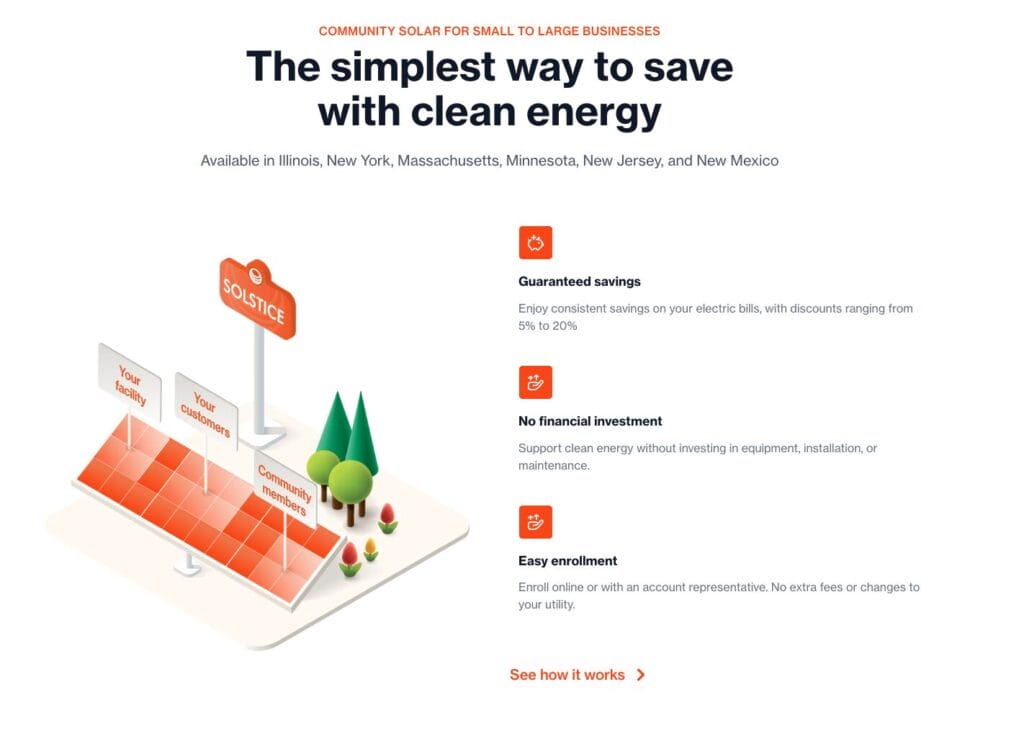
The company installs community solar panels so that people who don’t have rooftops or means to install solar power systems can still access solar energy, especially in low-income households. The company also focuses on education, innovation, and policy solutions. Its initiatives empower communities to get involved in their local energy systems to make informed choices to support a clean energy future.
Turning sustainability commitments into real impact
Sustainability and ESG are no longer side initiatives; they are core to how companies build trust, loyalty, and long-term value. But global ambitions only succeed when they translate into local action. From financing climate-positive projects to rethinking supply chains and designing accessible technologies, the businesses highlighted here show how impact grows when strategies meet community realities.
Language and cultural understanding sit at the heart of this work. Clear, localized communication builds credibility with consumers who demand proof, not promises. It also drives adoption of sustainable technologies and behaviors, ensuring investments in ESG deliver measurable results.
For organizations aiming to scale their sustainability programs worldwide, the lesson is clear: think globally, but connect locally. Embedding language and cultural insight into ESG strategies is about much more than just the messaging; it’s about making solutions usable, relatable, and trusted in every market.

DOWNLOAD NOW
Make global marketing strategies work in local markets
Harness the power of localization to effectively connect with audiences worldwide and discover best practices for making your next global marketing endeavor a success.